
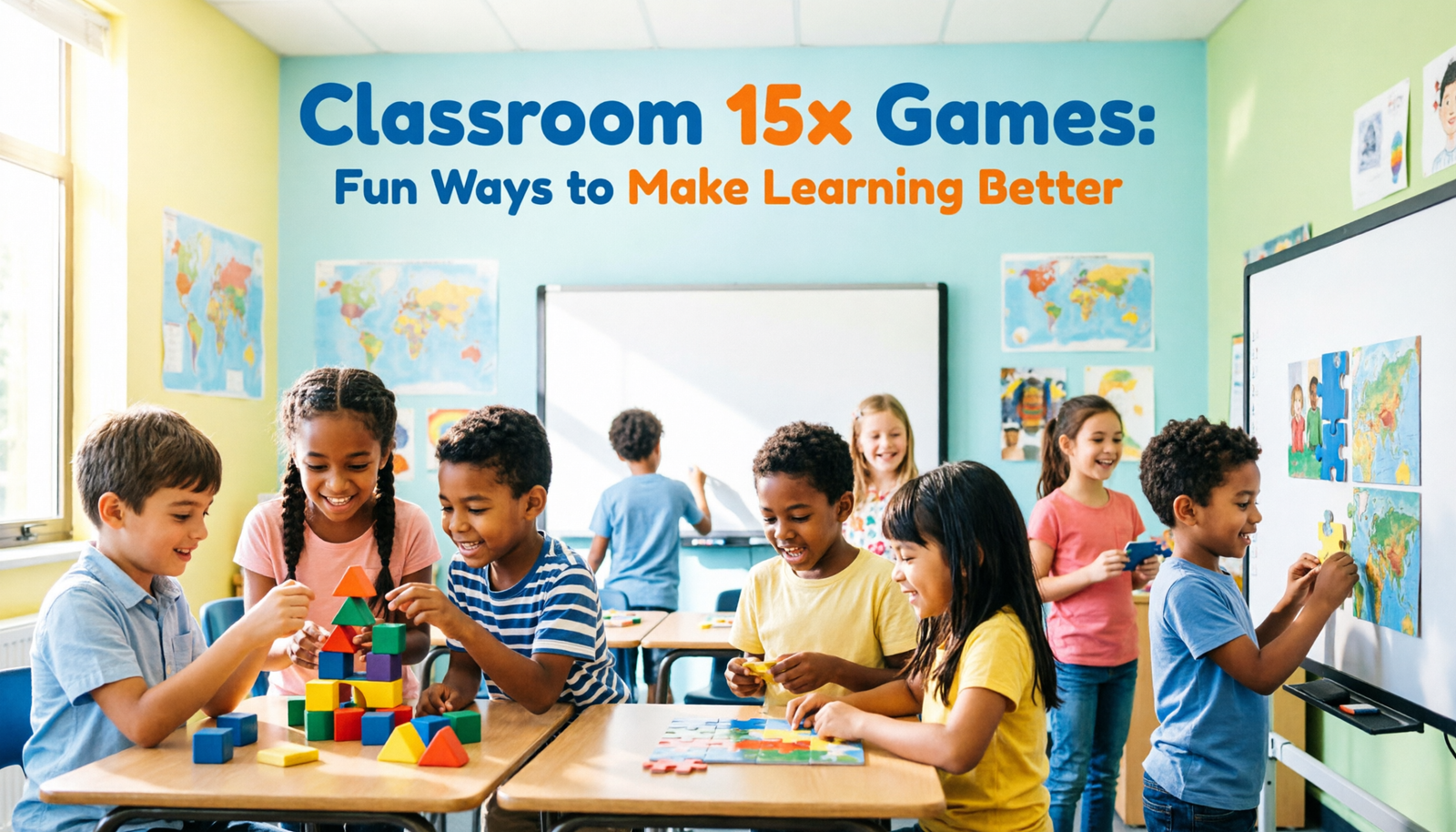
Learning does not always have to feel like hard work. In fact, games can make a classroom more exciting. They can help students learn while they play, think, move, and work with others.
Classroom 15x games can bring fresh energy into a normal school day. These games can help children stay focused. They can also make lessons easier to understand.
Teachers can use simple games for many subjects. For example, they can use games for math, reading, spelling, science, and general knowledge. Best of all, many games need very few supplies.
Games also give students a chance to learn together. They can share ideas and solve small problems as a team. As a result, students can build both school skills and social skills.
What Are Classroom 15x Games?
Classroom 15x games are simple learning games that teachers can use with students. The games can fit into lessons, breaks, review sessions, or group activities.
The word “15x” can suggest a collection of many game ideas. However, the main goal is simple. Students should have fun while they learn something useful.
These games do not need to be difficult. A teacher can change the rules to match the age and skill level of the class. Therefore, the same game can work for different groups.
The games can also take only a few minutes. This makes them useful when a teacher has little extra time. A short game can still create a useful learning moment.
Why Are Classroom 15x Games Useful?
First, games can make students more interested in a lesson. A normal question may seem boring. However, the same question can feel exciting when it becomes part of a game.
Second, games can help students remember information. When children connect learning with fun, they may remember the lesson more easily. Therefore, games can be a helpful review tool.
Finally, games can give students a reason to take part. Some children may not like speaking during a normal lesson. A game can give them a simple and friendly way to join.
Classroom 15x Games Can Improve Focus
Students can lose focus after sitting for a long time. This is normal. Children often need small changes to stay active and interested.
A quick classroom game can give students a mental break. At the same time, it can keep the lesson connected to learning.
For example, a teacher can ask students to solve five math questions. Each correct answer can earn a team point. Suddenly, students have a clear goal.
Also, teachers can use movement games. Students can stand, move to different areas, or act out answers. This can help children feel less tired during long lessons.
Classroom 15x Games for Math
Math games can make numbers feel less scary. Students can practice addition, subtraction, multiplication, division, fractions, and other skills through simple challenges.
One easy game is “Number Race.” The teacher writes a math problem on the board. Two students race to solve it correctly.
Another idea is “Math Bingo.” Students receive cards with numbers. The teacher gives problems. Students mark the correct answer on their cards.
Teachers can also make teams. Each team gets points for correct answers. However, speed should not be more important than accuracy.
Classroom 15x Games for Reading
Reading games can help children practice words and improve their understanding. They can also make reading activities feel more active.
For example, teachers can play “Guess the Word.” One student gets a word. The student gives clues without saying the word itself.
Another game is “Story Builder.” One student starts a short story. Then, each student adds one sentence.
This activity can improve imagination too. Students must listen carefully because each new sentence should connect with the story before it.
Classroom 15x Games for Spelling
Spelling can become more fun with a friendly challenge. Students can work alone or in small groups.
A teacher can write mixed-up letters on the board. Students then try to make the correct word.
Another simple activity is “Last Letter.” One student says a word. The next student must say a new word that starts with the last letter.
For younger students, teachers can use pictures. A picture can give students a clue about the word they need to spell.
Classroom 15x Games for Science
Science games can help students understand ideas in a fun way. They can also encourage children to ask questions.
Teachers can create a “True or False” game. They read a science statement. Students show whether they think it is true or false.
Another idea is “Mystery Object.” The teacher places an object in a bag. Students ask questions to discover what it is.
Teachers can also use sorting games. Students can sort animals, plants, materials, or objects into different groups.
Classroom 15x Games for General Knowledge
General knowledge games are great for review days. They can cover history, geography, animals, sports, famous places, and many other topics.
A classroom quiz can be very simple. The teacher asks a question. Teams write their answers on paper.
Then, everyone shows their answers at the same time. This gives every student a chance to participate.
Another option is “Guess the Place.” The teacher gives clues about a country, city, river, or famous location. Students try to identify it.
Classroom 15x Games for Teamwork
Team games can teach children how to work with others. This skill matters both inside and outside school.
Teachers can divide students into small groups. Each group receives a simple challenge. The team must discuss the answer before giving it.
However, teachers should make sure every student gets a chance to speak. One child should not control the whole activity.
Team games can also teach patience. Students learn that different people may have different ideas. Therefore, they need to listen and cooperate.
Classroom 15x Games That Need No Equipment
Teachers do not always have time to prepare materials. Luckily, many classroom 15x games need nothing except students and a teacher.
“Simon Says” is one simple choice. Teachers can connect the commands to learning. For example, students can touch something that starts with a certain letter.
“20 Questions” is another useful game. One student thinks of something. The class asks questions to guess it.
Teachers can also play “Stand Up, Sit Down.” They read statements. Students stand if the statement is true and sit if it is false.
Classroom 15x Games for Quick Brain Breaks
Brain breaks can help students return to a lesson with fresh energy. They do not need to last long.
A teacher can use a one-minute movement challenge. Students can stretch, clap, count, or follow simple movements.
Another game is “Copy Me.” The teacher makes simple movements. Students copy them.
Teachers can also add learning questions. For example, students can clap three times if an answer is correct. They can stay still if it is wrong.
Classroom 15x Games for Quiet Classrooms
Not every classroom game needs lots of noise. Quiet games can work well when students need to calm down.
“Silent Answers” is a good example. The teacher asks questions. Students write their answers instead of shouting them.
Another option is drawing. The teacher gives a word or idea. Students draw it without speaking.
Memory games can also be quiet. Students look at several items for a short time. Then, the teacher removes one item. Students guess what is missing.
Classroom 15x Games for Small Groups
Small groups can make games easier to manage. They also give shy students more chances to speak.
Teachers can place students in groups of three or four. Each group can receive a question or challenge.
For example, students can solve a puzzle together. They can then explain their answer to the class.
Small groups also help teachers see who needs extra support. A teacher can walk around and listen to each group.
Classroom 15x Games for Large Classes
Large classes can seem difficult to manage. However, simple rules can make games easier.
Teachers should explain the rules before starting. Students should know how to earn points and when to stop.
Teams can help reduce confusion. Each team can choose one speaker. This keeps answers organized.
Also, teachers should keep the games short. A ten-minute activity can be easier to control than a long game.
How Teachers Can Use Classroom 15x Games
Teachers can use games at different times during the school day. They do not have to replace normal teaching.
For example, a game can begin a lesson. It can introduce the topic and make students curious.
Games can also work in the middle of a lesson. They can give students a short break while still practicing the topic.
Finally, teachers can use games at the end. A quick quiz can show what students remember from the lesson.
How to Choose the Right Classroom Game
The best game depends on the students. Teachers should think about age, class size, subject, and available time.
First, choose a clear learning goal. Decide what students should practice during the activity.
Next, choose a simple game. Young students may need short instructions. Older students can handle more detailed rules.
Most importantly, choose a game that students can enjoy. When children have fun, they often become more willing to participate.
Making Classroom 15x Games More Exciting
Small changes can make a simple game feel new. Teachers can add points, teams, timers, or surprise questions.
However, competition should stay friendly. Students should not feel bad when they lose.
Teachers can also let students create questions. This gives them more control over the activity.
Another idea is to change roles. One student can become the question leader. Another can keep score. This helps students practice responsibility.
Benefits of Classroom 15x Games for Teachers
Games can help teachers in many ways. They can make lessons more active and easier to manage.
Teachers can also use games to check understanding. If many students answer incorrectly, the teacher knows that the topic may need more explanation.
Games can also build classroom relationships. Students and teachers can share fun moments together.
As a result, the classroom may feel more welcoming. Students can become more comfortable asking questions and sharing ideas.
Benefits of Classroom 15x Games for Students
Students can gain many skills from educational games. These skills include memory, teamwork, communication, problem-solving, and focus.
Games can also build confidence. A child who struggles with written work may do well during a team activity.
Furthermore, games give students a chance to practice without feeling too much pressure. They can make mistakes and try again.
That process is important. Learning often takes several attempts.
Simple Rules for Safe Classroom Games
Safety should always come first. Teachers should choose games that fit the classroom space.
Avoid activities that require unsafe running or pushing. Students should also understand that rough play is not allowed.
Next, explain how students should behave. Everyone should respect classmates and wait for their turn.
Finally, stop the game if students become too excited. A fun activity should still have clear limits.
Tips for Better Classroom Games
Teachers can follow a few simple tips. These tips can make activities easier and more enjoyable.
- Keep instructions short.
- Start with easy questions.
- Give every student a chance.
- Use friendly competition.
- Keep the activity moving.
- Praise good effort.
- Avoid embarrassing students.
- Change games when students lose interest.
- Connect every game to learning.
- End the game on time.
These simple steps can make a big difference. Therefore, teachers do not need complicated plans.
Classroom 15x Games for Different Age Groups
Younger children often enjoy movement and picture games. They can practice colors, letters, numbers, shapes, and simple words.
Older students may enjoy quizzes, puzzles, debates, and problem-solving games. Their activities can include more difficult questions.
Teachers should always adjust the challenge. A game that is too easy can become boring. A game that is too hard can become frustrating.
Therefore, the right level is important. Students should feel challenged but still able to succeed.
Using Technology With Classroom 15x Games
Technology can add another layer of fun. Teachers can use digital quizzes, classroom screens, or educational apps.
However, technology is not required. A good learning game can work with paper, pencils, or even just spoken questions.
If technology is used, teachers should keep the goal clear. The device should support learning instead of distracting students.
Also, teachers should have a backup plan. Technology can sometimes stop working at the wrong time.
Common Mistakes to Avoid
One common mistake is making the rules too complicated. Students may spend more time learning the rules than playing the game.
Another mistake is focusing only on winning. Learning should remain the main goal.
Teachers should also avoid using the same activity every day. Students may lose interest when everything feels the same.
Instead, rotate different classroom 15x games throughout the week. This keeps activities fresh and interesting.
How to Keep Games Fair
Fairness matters in every classroom. Students should understand that everyone has a chance to participate.
Teachers can rotate team leaders. They can also change teams from time to time.
Questions should have clear answers when possible. If a question has more than one answer, teachers should explain why.
Most importantly, teachers should reward effort as well as correct answers. This can help students feel proud of their progress.
Why Short Games Can Work So Well
Short games are useful because children can lose focus during long activities. A quick game can give them a fresh start.
For example, a teacher may use a five-minute word game before reading. Students become active before returning to their books.
Likewise, a short math challenge can work before a math lesson. It can remind students about skills they learned earlier.
Therefore, teachers do not need a whole class period for games. Even a few minutes can help.
Creating Your Own Classroom 15x Games
Teachers can also create original games. Start with the lesson topic.
Next, think of one simple question or skill. Then, turn that skill into a challenge.
For example, spelling words can become a guessing game. Math facts can become a team race. Science facts can become a true-or-false challenge.
The best classroom 15x games do not need complicated designs. A clear goal and simple rules are often enough.
Frequently Asked Questions
1. What are classroom 15x games?
Classroom 15x games are simple activities that combine learning and play. Teachers can use them for lessons, reviews, brain breaks, and group work.
2. Are classroom 15x games good for young students?
Yes. They can be very useful for young students. Teachers can choose easy rules and short activities. They can also use pictures, movement, and simple questions.
3. Do classroom 15x games need special equipment?
No. Many games need no equipment. Teachers can use questions, words, numbers, or simple classroom objects. This makes the games easy to start.
4. Can these games help with school subjects?
Yes. Teachers can use games for math, reading, spelling, science, history, and general knowledge. They can change the questions to match the lesson.
5. How long should a classroom game last?
There is no single perfect time. However, five to fifteen minutes often works well for a quick activity. Teachers can make games longer when students stay focused.
Conclusion
Learning can be more enjoyable when students get to play. Games can create energy and excitement in the classroom.
Classroom 15x games can support many subjects. They can also improve teamwork, memory, focus, and confidence.
Teachers do not need expensive materials. They can start with simple questions and easy rules.
Moreover, games can fit into almost any lesson. They can work at the beginning, middle, or end of class.
The key is to keep learning at the center. When students enjoy the activity, they may become more willing to participate.
So, try different classroom 15x games and see what works best for your students. Keep the rules simple. Keep the mood friendly. Most of all, make learning fun.