
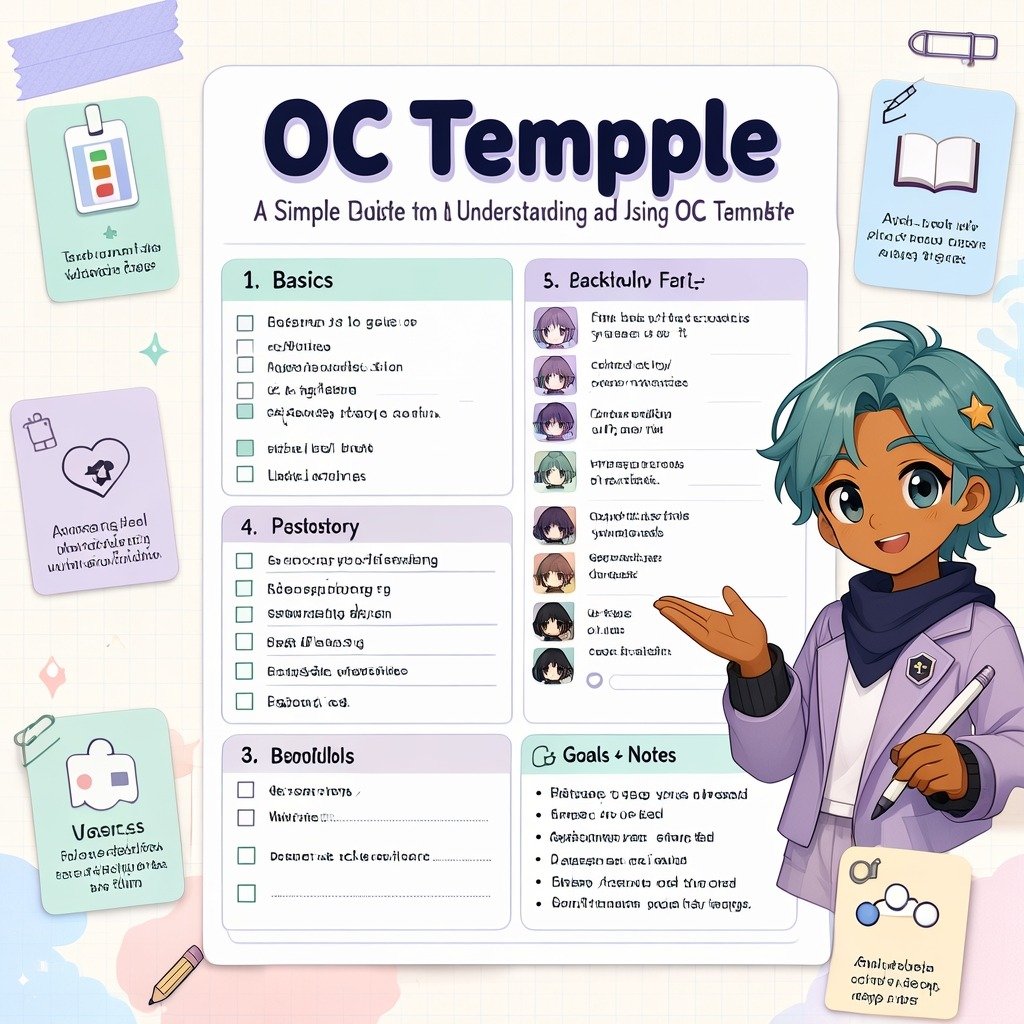
Creating an original character can be fun. However, it can also feel hard at first. You may have many ideas in your mind. Yet, you may not know where to put them.
That is where an oc template can help. It gives you a simple way to organize your character. You can add details about looks, personality, history, skills, and goals.
In this guide, we will explain what an oc template means. We will also look at its main parts. Finally, you will learn how to use one to build a better original character.
What Is an OC Template?
An oc template is a ready-made character form. OC usually means “original character.” People use original characters in stories, games, comics, roleplays, and artwork.
The template gives you different sections to fill in. These sections may ask about the character’s name, age, looks, personality, hobbies, and background.
Therefore, you do not need to start with a blank page. Instead, you can follow the structure. This makes character creation easier for beginners.
An oc template can also help you remember small details. For example, you may forget your character’s favorite food or biggest fear.
A good template keeps those facts in one place. As a result, your character can feel more complete and consistent.
Why Should You Use an OC Template?
Creating a character from scratch takes time. You may have a great idea, but your thoughts can become messy. A template gives your ideas a clear order.
For example, you can start with basic information. Then, you can move to appearance and personality. After that, you can work on the character’s story.
An oc template also saves time. You do not need to create the same sections again. You can simply fill in the parts that matter to you.
It can also help new writers. Beginners often forget important character details. A template reminds them what they may want to include.
Moreover, templates work well for artists. Artists can use them to plan outfits, colors, body features, and other visual details.
Main Parts of an OC Template
Every oc template can look different. Still, most templates share some common sections. These sections help you understand the character from different sides.
Here are some common parts:
- Character name
- Age
- Gender
- Pronouns
- Species
- Appearance
- Personality
- Likes
- Dislikes
- Hobbies
- Skills
- Weaknesses
- Family
- Friends
- Goals
- Fears
- Backstory
You do not need to use every section. Instead, choose the parts that fit your character.
A simple character may only need basic details. However, a main character may need a much deeper profile.
Character Name and Basic Details
Start with the simple information. Give your character a name that fits their world. The name can also match their personality or background.
Next, add their age. You can also include their birthday if it matters. Then, add pronouns, species, and other basic facts.
This part gives readers a quick view of the character. Therefore, keep it clear and easy to read.
You can also add a short character title. For example, the character may be a student, warrior, doctor, explorer, or detective.
A useful oc template makes these details easy to find. This helps you when you need to check your character later.
Appearance
Appearance helps readers picture your original character. You can describe their hair, eyes, skin, height, body shape, and clothing.
However, you do not need to write every tiny detail. Pick features that make your character easy to recognize.
For example, your character may have bright red hair and a green jacket. They may also wear a small necklace from their grandmother.
These details can make the character more memorable. They can also tell part of the character’s story.
When using an oc template, try to connect appearance with personality. A careful person may keep their clothes neat. A wild character may have a rough or messy style.
Personality
Personality is one of the most important parts of character creation. It explains how your character thinks and acts.
Start with a few basic traits. Your character might be kind, shy, brave, funny, serious, curious, or stubborn.
However, avoid making your character perfect. Real people have both good and bad traits. Your original character should have flaws too.
For example, a brave character may still fear losing friends. A smart character may make poor choices when angry.
This balance makes the character feel more real. Therefore, add both strengths and weaknesses to your oc template.
Likes and Dislikes
Likes and dislikes can add small details to your character. They can also make scenes more interesting.
Think about simple things. What food does your character love? What music do they enjoy? What places make them happy?
Then, think about things they dislike. Maybe they hate loud sounds. Perhaps they dislike cold weather or crowded places.
These details may seem small. Yet, they can show personality without long explanations.
You can also use likes and dislikes to create funny moments. For example, a serious hero may secretly love cute toys.
Skills and Talents
Skills show what your character can do well. These skills can fit their story and world.
A character may know how to cook. Another may be good at drawing. Someone else may know martial arts, coding, singing, or magic.
However, avoid giving your character every possible skill. Too many talents can make the character feel unrealistic.
Instead, choose skills that support the character’s role. Give them clear limits too.
An oc template makes it easier to compare skills and weaknesses. This can help you create a more balanced character.
Weaknesses and Flaws
Weaknesses are important. They give your character room to grow.
For example, your character may be afraid of failure. They may struggle to trust people. They may also become angry too quickly.
Physical weaknesses can work too. A character may have poor eyesight or low stamina.
The best flaws affect the story. They should create problems that your character must face.
Therefore, do not treat flaws as simple decorations. Use them to create challenges and growth.
Goals and Dreams
Every strong character needs something they want. This desire gives the character direction.
The goal can be simple. Maybe the character wants to make a new friend. Perhaps they want to win a contest or protect their family.
The goal can also be much bigger. They may want to save their city or discover a hidden world.
When filling out an oc template, ask one useful question: “What does my character want most?”
The answer can guide many parts of your story. It can also help you decide what your character does next.
Fears
Fear adds emotion to a character. It also creates natural problems in a story.
Your character may fear heights. They may fear being alone. They may also fear losing someone they love.
A fear does not need to be dramatic. Even small fears can make a character interesting.
For example, a powerful hero may hate spiders. That simple detail can create funny or surprising scenes.
You can add fears to your oc template. Then, you can use them when planning future stories.
Family and Friends
Relationships help shape a character. Therefore, think about the people around them.
You can list parents, siblings, friends, teachers, enemies, or teammates. You can also explain how your character feels about these people.
For example, a character may love their older sister. However, they may often argue with her.
This type of relationship feels natural. It also gives you more ideas for stories.
An oc template can include a simple relationship section. You can use it to keep track of important people.
Backstory
A backstory explains where your character came from. It can describe important events from their past.
However, you do not need to write a huge history. Start with a few events that changed the character.
Maybe they moved to a new city. Perhaps they lost a friend. Maybe they discovered an important secret.
These events can explain their current behavior. For example, a character who avoids people may have been hurt in the past.
A clear backstory can make your character easier to understand. It can also give you new story ideas.
How to Fill Out an OC Template
First, start with the easy sections. Write the name, age, species, and other basic details.
Next, describe the character’s appearance. Then, think about their personality. Choose a few strong traits instead of making a huge list.
After that, add likes, dislikes, skills, fears, and goals. These sections help you understand how the character behaves.
Finally, write the backstory. You can keep it short at first. Later, you can add more details.
Do not worry about making everything perfect. Your character can change as you develop them.
Tips for Making a Better Original Character
A good character does not need to be complicated. In fact, simple characters can become very memorable.
Start with one strong idea. Then, build around it. Give the character clear goals, useful skills, and believable flaws.
Also, avoid copying another character too closely. Inspiration is fine. However, your character should have their own identity.
You can use an oc template as a starting point. Then, add your own creative details.
Here are a few useful tips:
- Give your character a clear goal.
- Add both strengths and weaknesses.
- Create meaningful relationships.
- Give them unique habits.
- Avoid making them perfect.
- Keep their personality consistent.
- Let them learn from mistakes.
How an OC Template Helps Writers
Writers often create many characters. It can become hard to remember every detail.
An oc template keeps character information organized. You can quickly check important facts before writing a scene.
For example, you can check your character’s fears before writing a dangerous scene. You can also check their personality before writing dialogue.
This helps prevent mistakes. It also keeps your story more consistent.
Moreover, templates make planning easier. You can compare different characters and find ways to make them different.
How Artists Can Use an OC Template
Artists can use templates in a different way. They can focus more on visual information.
For example, an artist can include hair colors, eye colors, outfits, body shapes, and important accessories.
A color palette can also help. Add the main colors that belong to the character.
You can also add front, side, and back views. This method helps artists draw the same character correctly.
Therefore, an oc template can become a useful reference sheet. You can keep it beside you while drawing.
How Roleplayers Can Use an OC Template
Roleplayers also benefit from character templates. A template gives players a quick way to introduce their characters.
You can include personality, skills, powers, goals, and limits. You can also describe how the character talks.
This information helps other players understand the character. As a result, roleplay can feel smoother.
You can also add rules for special abilities. This prevents confusion during games.
A detailed oc template can make group roleplay easier. Everyone can understand each character before the story begins.
How to Avoid Common OC Mistakes
One common mistake is making a character perfect. Perfect characters can feel boring because they have no real challenges.
Another mistake is adding too many powers. Powerful characters need limits. Otherwise, problems become too easy to solve.
Some creators also add too much information. A huge profile can become hard to read.
Instead, focus on useful details. Every fact should tell you something about the character.
You can also review your oc template after finishing it. Remove details that do not add value.
Make Your OC Feel Real
Real people have mixed feelings. They can be happy and sad on the same day. They can also make good and bad choices.
Your character should have similar depth. Let them make mistakes. Let them change their mind.
Give them habits too. Maybe they tap their fingers when nervous. Perhaps they always carry a notebook.
Small actions can show personality. They can also make scenes feel more natural.
When you complete an oc template, look for these human details. They can turn a basic idea into a memorable character.
Simple OC Template Example
You can create your own form from the sections above. Here is a simple structure:
- Name:
- Age:
- Pronouns:
- Species:
- Occupation:
- Appearance:
- Personality:
- Likes:
- Dislikes:
- Skills:
- Weaknesses:
- Fears:
- Goals:
- Family:
- Friends:
- Enemies:
- Backstory:
You can add more sections when needed. You can also remove sections that do not fit your character.
The best template is the one that helps you create. Therefore, do not feel forced to follow one exact format.
Where Can You Use an OC Template?
An oc template can work in many creative projects. You can use one for novels, comics, games, roleplay, fan communities, and personal art projects.
Students can also use templates for creative writing. They provide a simple structure for building characters.
Game creators can use them during early planning. They can record character roles, abilities, goals, and weaknesses.
Artists can use them as character references. Meanwhile, writers can use them as story notes.
Because of this, one template can support many creative tasks.
How to Keep Your OC Template Organized
Keep your character information in one place. You can use a notebook, document, or digital folder.
Use clear headings. Also, keep related details together. This makes information easier to find.
You should update the template when your character changes. However, keep important old details if they still matter to the story.
A clean oc template saves time later. It also makes it easier to share your character with other people.
5 Small FAQs About OC Templates
What does OC mean?
OC usually means “original character.” It refers to a character created by a person. The character can appear in stories, art, games, comics, or roleplay.
What is an OC template?
An oc template is a form for character information. It gives you sections for details such as appearance, personality, skills, goals, and backstory.
Do I need to fill every section?
No. You can skip sections that do not fit your character. Start with the most useful details. Then, add more information as your character grows.
Can artists use an OC template?
Yes. Artists can use templates to record colors, clothing, body details, hairstyles, and accessories. They can also add reference drawings.
Can I make my own OC template?
Yes. Making your own template is easy. Choose the sections you need. Then, arrange them in a simple order that feels comfortable.
Conclusion
Creating an original character should feel fun. You do not need to make everything perfect at the start.
An oc template gives you a simple place to begin. It helps you organize ideas and remember important details.
You can use one for writing, drawing, games, or roleplay. You can also change the template whenever your character grows.
Most importantly, let your creativity lead the way. Give your character goals, flaws, fears, and dreams.
Start with a simple idea. Then, build it step by step. Soon, you can turn that idea into a character that feels unique, believable, and memorable.